

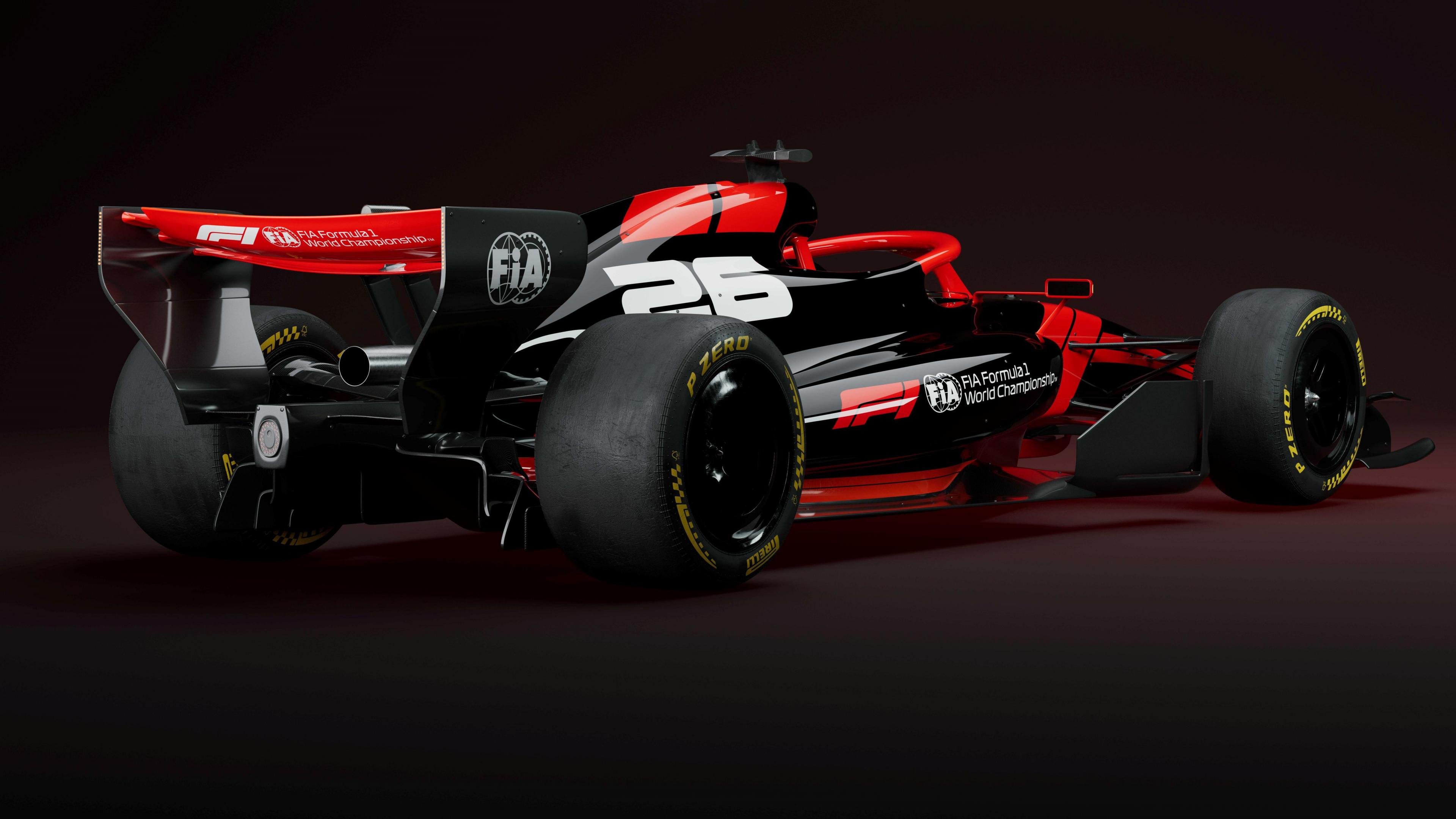
The 2026 cars are expected to be lighter, more agile and sustainable relative to present-day cars.
F1 has unveiled the simplified vocabulary that will be used to describe the intricate details of its upcoming 2026 technical rules.
The championship is introducing what is considered the biggest regulation change in its competitive history next season, featuring new chassis and engine rules and the mandatory use of 100% sustainable fuels.
The updated 1.6-litre V6 turbo hybrids, which retain the 1.6-litre V6 configuration, boast a substantially higher energy storage, necessitating key advancements in the aero packages.
During grand prix events, pilots will carefully oversee electrical energy – potentially on hot laps – to extract the best result.
Extensive fan consultation were carried out with a wide range of fans, including new, casual and core fans, to understand which terms would improve understanding of the central aspects of the 2026 changes.
The stated goal was to present a set of intricate technical aspects of the competition as accessible as possible for the widest audience.
Consequently, older technical labels for some systems – such as "alphabetical mode names" for the adjustable aero – have been phased out in preference for intuitive labels that clearly indicate the primary purpose of the system.
Key Technical Innovations
Regulators explain that competitors will have more power to make decisions regarding power usage, harvesting, and conservation.
The upcoming changes feature a series of modes that will be clearly indicated on broadcast screens to aid the audience's understanding of the race battle.
- Attack Mode: This supersedes the existing Drag Reduction System. It provides a short boost of battery power available when a competitor is within one second the leading car to facilitate an overtake.
- Extra Push Mode: This is a manual battery discharge from the ERS that can be deployed for offensive or defensive moves. It provides the pilot full engine and battery energy at the push of a button.
Both of these strategic tools will have to be managed carefully, as the total energy is strictly limited.
- Active Aero: Both the nose and rear wings change configuration – opening on the straights for reduced drag and higher speed, and sealing in the corners for optimal cornering performance.
- Battery Recharge: The system can replenish their battery with energy harvested under braking, or during partial power application at the straight's end or in certain corners where only partial power is applied.
2026 Car Specifications
The next-generation machines will be smaller and lighter compared to the 2025 spec, with a distance between axles cut by 200mm to 3,400mm, car width reduced by 100mm – down to 1,900mm – and the lowest permissible weight lowered by 30kg.
Total aerodynamic grip is projected to decrease by approximately fifteen to thirty percent, although squads will inevitably claw this back as they refine their designs.
Drag has been slashed by 40%. The vehicles will employ adjustable aero systems – front and rear wings will adjust on the straights to cut resistance and enhance velocity and return into place for peak handling.
Wheels will retain the current rim size, but the rubber compounds will be reduced in width, by 25 millimetres on the front axle and 30 millimetres on the rear axle.
Power Unit Revolution
The revised hybrid units will have an approximate 50-50 split in horsepower generated by the petrol engine and the battery and motor, a rise from about 20% electrical this year.
The energy recovery system is simplified through the deletion of the Motor Generator Unit – Heat, the intricate and expensive unit that generated electricity from the turbocharger.
Cars will be obliged to compete on 100% sustainable fuel, produced using biomass or lab-created processes.


